En Ingles

From Ashes to the Pampas - Jewish survivors in Argentina. Context, Migration and Silence.

“Forgive me—I didn’t know. I thought this was a safe place. I’m sorry I brought you here”. My mother’s voice, urgent and shaken, came through the phone on July 18, 1994. That morning, a bomb destroyed the AMIA (our JCC), the central Jewish communal institution in Buenos Aires and then my mother said: “They want to kill us again.”

Her use of the word again was not rhetorical. For my mother, a survivor of the Shoah, the attack collapsed temporal distance: the present was suddenly continuous with the past. The category of “we” expanded across generations. It was a call for action. At that moment, I understood fully and perhaps for the first time— that “us” “they want to kill us” meant Jews so I was included in that collective vulnerability. How did I not know? Why was this surprising to me?

I was born in Poland shortly after the end of the Nazi occupation and arrived in Argentina in 1947, not yet two years old. Like many survivors, my parents chose Argentina as a destination that promised distance from Europe and a welcoming and safe place. 
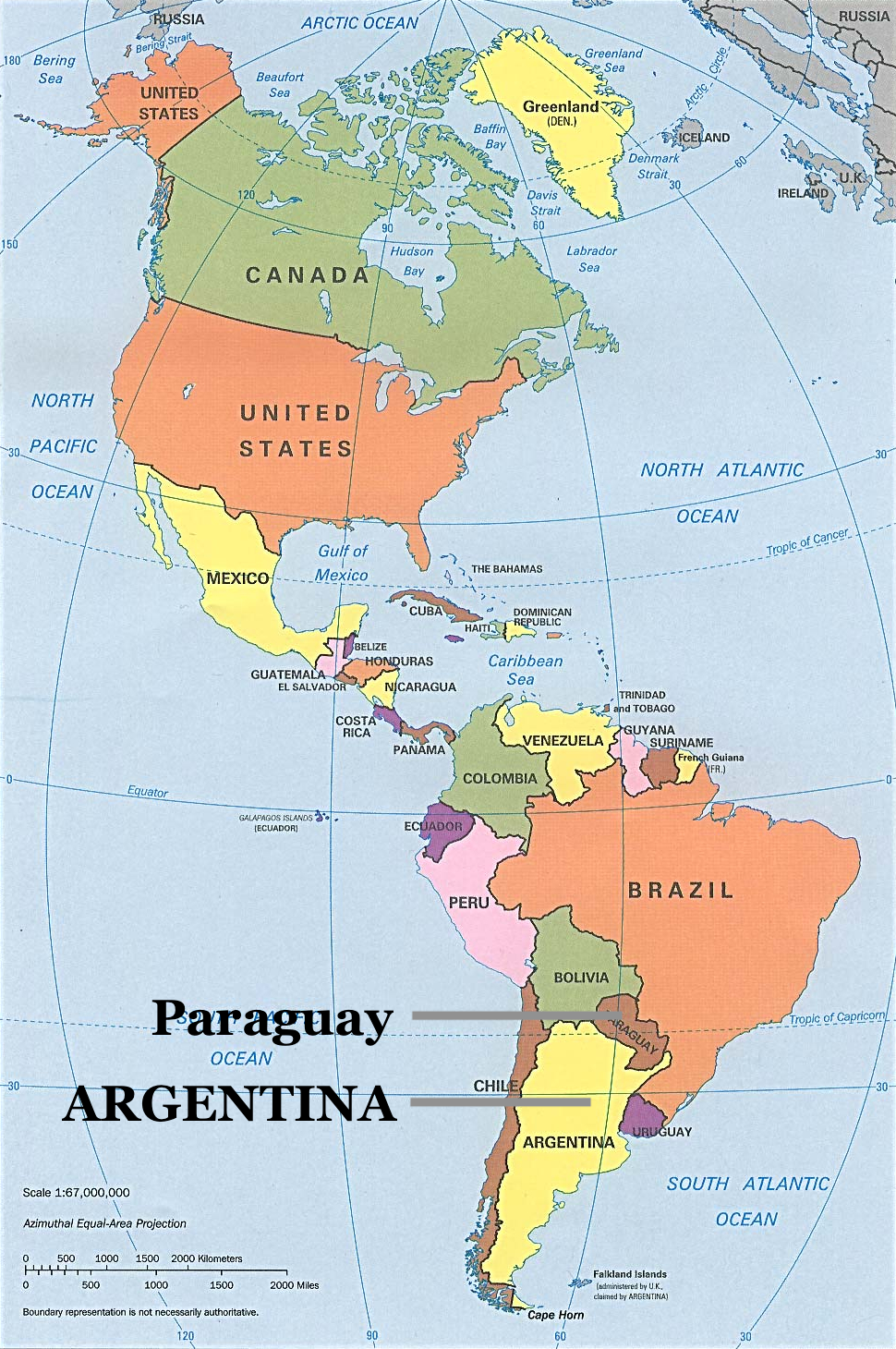
To understand that choice, we need to situate Argentina within its historical, geographical and social context.


At the turn of the twentieth century, Argentina was among the world’s wealthiest nations.
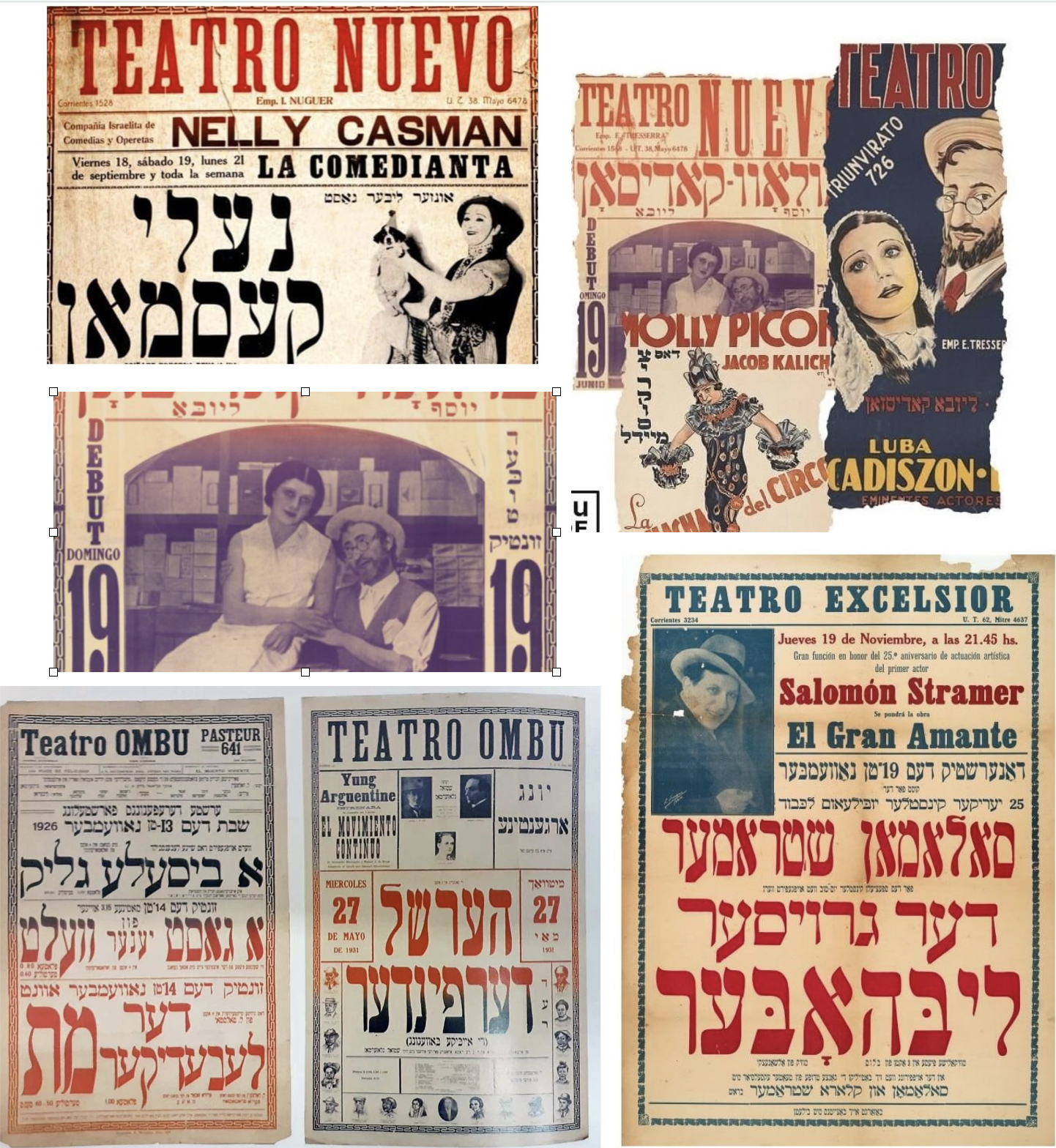
Theatre posters


Known as the “granary of the world,” and with Buenos Aires often described as the “Paris of South America,” the country attracted millions of immigrants. Its system of free, compulsory, and secular public education placed it as a regional leader.

By the end of World War II, Argentina’s Jewish population exceeded half a million. It sustained a dense institutional and cultural life, including mutual aid organizations, schools, theaters, cafés, and synagogues. Institutions such as the AMIA, destroyed in 1994, played a central role in structuring communal life.

Hitler’s birthday rally, 1938

Yet Argentina’s history also includes the presence of nationalist and authoritarian trends receptive to European fascism and the so-called “German miracle”. During the interwar period, sectors of the political class, the military, and Catholic nationalist groups expressed admiration for Nazi Germany. For instance in 1938, one year before the breaking of the war, a mass rally was held in Buenos Aires to celebrate Hitler’s birthday, it was the largest pro-Nazi demonstration outside Europe.

This coexistence—between refuge and hostility—shaped the experience of Jewish migration. Despite bureaucratic restrictions, such as the 1938 Foreign Ministry secret directive 11 that effectively barred Jewish immigration, thousands of Jews entered Argentina. Some did so legally through family sponsorship; others, like my family, entered under false identities.

At the same time, Argentina admitted 180 Nazi perpetrators, including Adolf Eichmann and Josef Mengele. While this contributed to the country’s reputation as a haven for Nazis, it is important to see it within a wider global pattern in which multiple states, including the United States and the Soviet Union, received much more than 180 former Nazis too.

Antisemitism in Argentina has often functioned as a latent structure—intermittent rather than constant, but capable of activation in specific political contexts. Several historical moments show this dynamic.
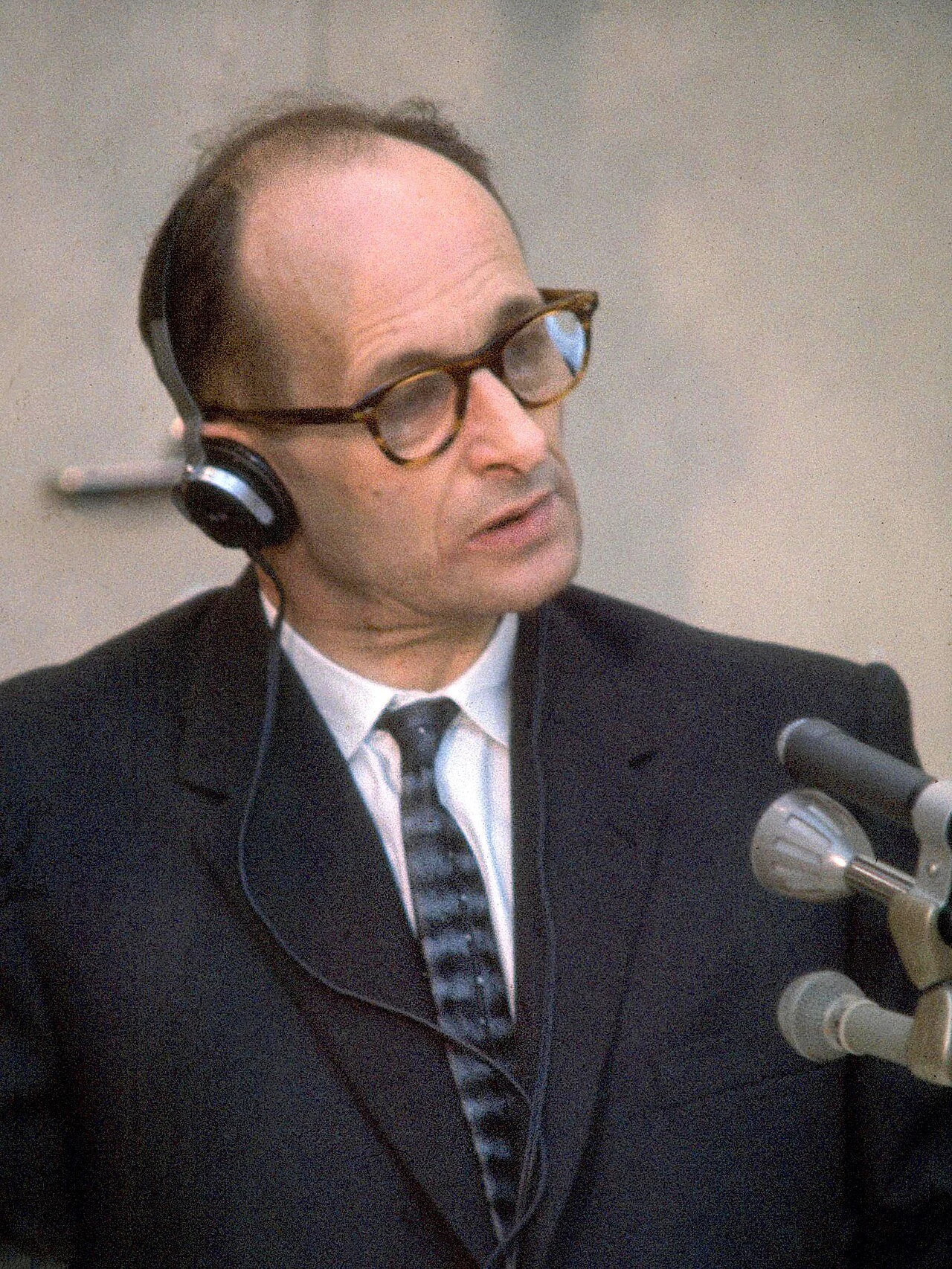
Adolf Eichmann in trial

One was the 1960 capture of Adolf Eichmann in Buenos Aires by Israeli agents that generated a diplomatic crisis centered on national sovereignty. And there were public reactions including expressions of antisemitism that translated into harassment and violence against Jewish individuals and institutions.

Another moment was during the military dictatorship (1976–1983), when antisemitism manifested with particular intensity within the system of clandestine detention. Jewish prisoners were frequently subjected to aggravated forms of torture marked by explicit antisemitic symbolism and discourse.

Testimonies, including that of journalist Jacobo Timerman, document the ideological dimension of this violence. Moreover, the proportion of Jews was significantly higher than their share of the general population among the desaparecidos, as we call the disappeared youths of the crackdown, suggesting targeted dynamics within wider repression.
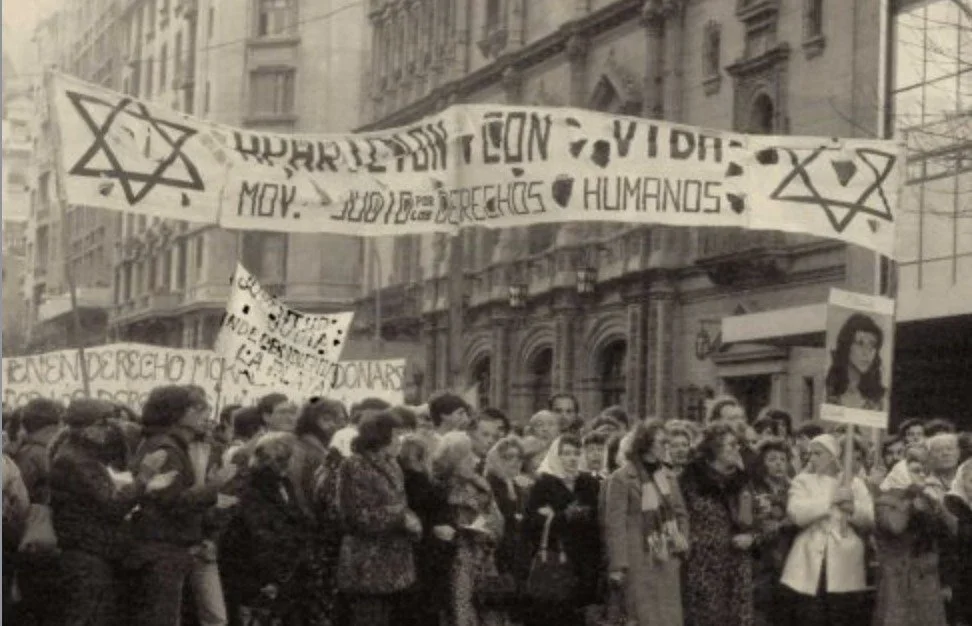
Jewish Movement for Human Rights, 1981

In this context, the emergence of the Jewish Movement for Human Rights—led by figures such as the American Rabbi Marshall Meyer and journalist Herman Schiller—represented a critical intervention linking Jewish identity with universal human rights discourse.
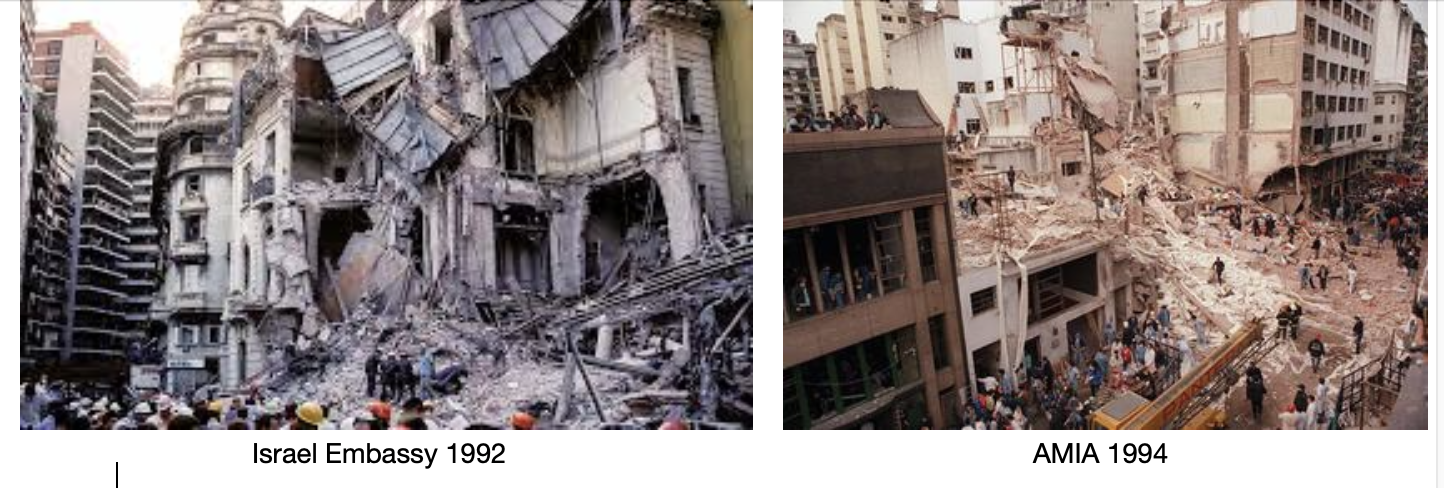
Another set of  moments, when latent antisemitism sufaced, were the attacks on the Israeli Embassy in 1992 and the AMIA building in 1994. It marked another turning point. These events not only resulted in mass casualties but also transformed the visibility and self-understanding of the Jewish community. The destruction of the AMIA building had both material and symbolic consequences not only for me: it dismantled physical and metaphorical boundaries, propelling a shift from relative inwardness to public engagement.

Buenos Aires Holocaust Museum
IHRA presided by Argentina in 2026

In the decades that followed, new institutional and memorial initiatives emerged.  These included the creation of the Holocaust Museum and the expansion of Holocaust education, the establishment of research centers, and participation in transnational frameworks such as the International Holocaust Remembrance Alliance (IHRA). Argentina’s leadership role within IHRA reflects a wider process of state engagement with Holocaust memory and this year 2026 has the honor of presiding over it.

At the same time, contemporary events—including the October 7th Hamas attacks in Israel—have reactivated global antisemitism in new forms. These developments raise urgent questions about memory, transmission, and the limits of historical consciousness. The Shoah is no longer confined to the past; it functions as a framework through which present violence is understood.

What many believed belonged to history erupted again with shocking immediacy. New forms of hatred now openly legitimize antisemitism. How do we respond? How do we confront it? Can it be changed?
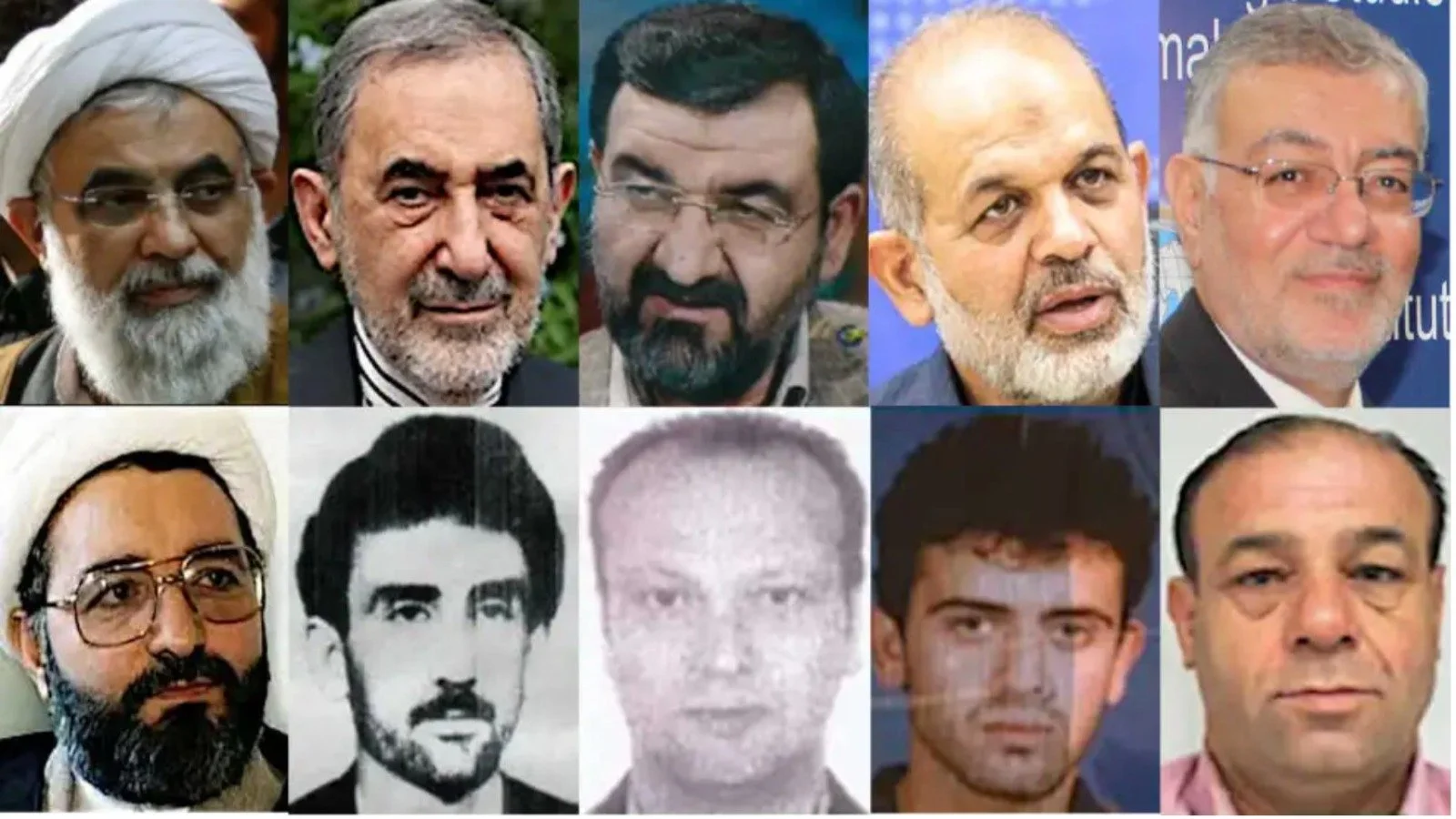
Iranian executed 2025/6

The memory of the Shoah no longer belongs only to the past. But remembering is not enough—it demands new answers in a world that, once again, as my mother said, wants to kill us again, normalizing barbarity.

We are living through a wider conflict involving Iran, whose leadership has long called for Israel’s destruction. For Argentines, this carries particular weight because several Iranian officials linked to the past attacks in Buenos Aires had been on Interpol lists for years and were finally executed.. Argentine courts failed to bring them to justice; in some cases justice is pursued beyond the framework of the law.

The experience of survivors in Argentina was not uniform. Some rebuilt communal networks rooted in shared geographic origins; others aligned with political movements; some turned toward religious life; but many chose silence, concealing their past even within their families.

In my own case, silence structured my upbringing. My parents, fearing exposure, avoided explicit references to Jewish identity. Even my name was shaped by this concern. Rather than giving me a recognizably Jewish name honoring my late mom’s sister,, they chose one that would allow for social invisibility.

This strategy of concealment had lasting effects. I grew up largely disconnected from Jewish communal life. My first conscious encounter with Jewish identity occurred through exclusion: when, as a child, I was told I could not participate in Catholic communion because I was Jewish.

It was a moment of rupture but it did not immediately produce identification On the contrary, it led me to adopt a universalist stance, rejecting particular identity categories. Only decades later, in the aftermath of the AMIA bombing, and when my mother said that “they want to kill us again” did identification emerge as both conscious and voluntary.

But why did the survivors remain silent for decades? There were moments where silence seemed to be broken. Mainly two: the Eichmann trial in the sixties and the Holocaust series starred by Merryl Streep and James Woods in the seventies. Survivors gained visibility but it was still not enough to break de wall of silence.

It was not until the nineties with Schindler’s List and the Shoah Foundation—that survivors  that survivors felt to be truly heard and recognized, only then the flood of testimonies began.
This trajectory invites a wider reflection on the role of silence in the lives of survivors and their descendants. Silence, often understood as negativity or repression, can also function as a protective and structuring mechanism. As Jorge Semprún suggests, the impossibility of immediate narration may be a condition for survival. Dominique Frischer similarly argues that postwar silence enabled the reconstruction of life.

And I see that this pattern is not unique to Holocaust survivors. Comparable dynamics appear among survivors of other forms of mass violence, including genocides, wars, and state terror. In each case, time is required—not only for memory to come to light, but for the reconstruction of trust, only then words can be said. Contradicting the common belief of the benefits of talking, in some circumstances, it seems healthier to remain silent. I thought a lot about it because there must be a reason. And I think it is a matter of trust.   

Smiling survivors on my 9th birthday

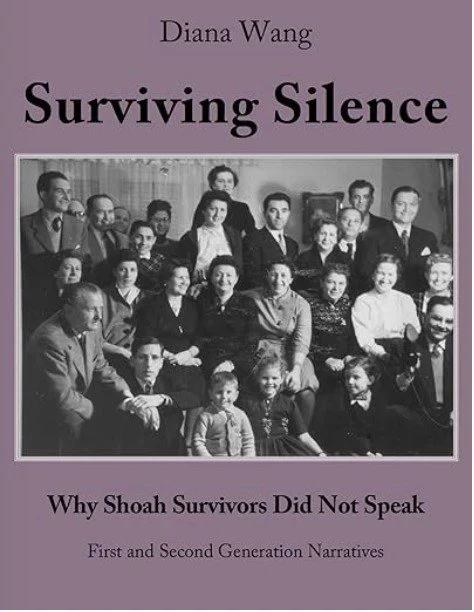
Mass violence disrupts the foundational assumptions that sustain social life. When the state becomes the agent of persecution, the basic framework of trust collapses. The restoration of that framework is a slow process, grounded in everyday practices: building families, working, creating continuity. That is why they remained silent. Only after this reconstruction of trust can memory be articulated. Trust must be rebuilt—slowly—through living: forming families, working, creating a future. Only then, decades later, can these heavy memories be faced and words can emerge as I tell in my own book. In the photo, the group of survivors on my ninth birthday.

The history of Jewish survivors in Argentina reveals a complex interplay between migration, memory, silence, and identity. It challenges linear narratives of integration, and highlights the enduring effects of trauma across generations.

To remember is not merely to preserve the past. It is to engage actively with the present, to recognize the conditions under which violence becomes possible, and to confront the forms it takes today.

Today the few survivors still alive give testimony whenever they are asked and they are members of  the Holocaust Museum and participate in several activities there.

Honoring them and us, their children, I will end with a poem written with Aida Ender, also a daughter of survivors like me. Rephrasing the partisan hymn “Never say this is the final road,” we wrote that:

Each Road Is a Beginning
(Aída Ender and Diana Wang)

We are the ones who survived— plundered, marked, cast out,
imprisoned, violated, humiliated.
We know—yes, we know— no road is ever the last.

We stood in the mud of hell, in darkness, in terror, in storm,
and learned there, that even that road was not the last.

We came through hunger, through cold, through horror—
through typhus, through shame— dreaming of a tree heavy with bread,
believing this road, too, would not be the end.

We are the hidden ones, the fugitives, the spared—
the lucky, the rescued, the saved— and we cry out: there is no final road.

We are the ones who changed our names, who fought in forests,
who rose from rubble and bewilderment confirming that this was not the end.

With memory still burning, with scars that do not fade,
we walked railways, streets, open roads under leaden skies,
eyes wide—always searching. No road was the final one.

From soaked earth after the storm new shoots broke through.
Leaves and fruit covered the wounded trees.
Seeds pushed upward—fierce, insistent. 

We stood again—rebuilt, defiant.
And kept walking because no road was the end.

We mourn our dead— forgetting is forbidden.

Those who come after us take up what we carry.
They deepen our footprints, bear memory forward,
eyes set on an open horizon— promise everywhere.

Because every road begins again. None is the last.

We are the ones who survived, and the ones born after.
We drink from life, measure for measure.

Not that road— not this one—
not any road— will be the last.

For, every road is a beginning.
And there will be others. Many more.

The Jewish people live. We are here.
Mir zainen do. Am Yisrael chai.

Femalism (*): The Mirror Image of Machismo

In a primary school in Buenos Aires, a group of seventh-grade boys created a WhatsApp chat that excluded the girls. “We’re tired of being labeled as harassers or sexist any time we do something they don’t like,” said one of them. Twelve-year-old boys.

The miniseries Adolescence offers, in four raw and devastating episodes, a stark portrait of the current state of gender relations among teenagers—something we, the adults responsible for them—parents, teachers, and authorities—seem to misunderstand or simply ignore. As a result, we are unsure of how we would even begin to address it.

But the phenomenon is not confined to youth. It is increasingly visible among adults as well. Married men, good fathers with no significant marital strife, speak of feeling imprisoned in their own homes—longing not for divorce, nor to abandon their children or financial responsibilities, but for liberation from the constant scrutiny, judgments, criticism, and expectations from family members which feels suffocating. They want the freedom to come and go without explanation, to maintain their space and habits—neat or messy—as they please, without being held accountable to anyone. Their yearning rarely centers on extramarital affairs, though some might include that in their personal sense of escape. At its core, it’s about the desire for autonomy and peace.

So, what is happening with men—boys, adolescents, and adults alike? What crisis are they experiencing? What has changed?

Masculinity, clearly, is under scrutiny. What it meant to “be a man” no longer holds. The feminist movement—decades in the making—has shifted cultural expectations and perspectives for both sexes. The traditional Western male identity, built on dominance and patriarchy, has lost its legitimacy. And rightly so. Feminist activism has led to a necessary and just cultural reckoning. But in recent years, the discourse has grown increasingly radical, rigid, and adversarial. Everything masculine has been equated with machismo, and as such, it is condemned, vilified, and rejected with such fervor that some have termed it feminazism. I prefer a different word: femalism.

Femalism is the counterpart of machismo—just as authoritarian, oppressive, and aggressive. Its extremism has fueled a backlash, a pendulum swing that has given rise to a growing masculine rebellion, now evident in the digital underworld known as the manosphere. This space channels a form of virulent, reactionary machismo that expresses deep hostility toward women. One offshoot is the incel movement—short for “involuntary celibates”—whose members accuse women of being dismissive, hyper-selective, and discriminatory. Some even justify or promote violence as a response.

Today’s men are expected to feminize their behavior—to be empathetic, emotionally aware, and gentle in their speech. They are urged to understand and respect that female desire operates differently, and to accept that. Most recognize the fairness in these demands and genuinely try to meet them—though doing so often clashes with their own biology, upbringing, or cultural conditioning.

They are also expected to bottle-feed babies, change diapers, attend pediatric appointments and parent-teacher meetings, cook, do laundry, and fully share child-rearing and household duties with their partners. These are entirely reasonable expectations in a world where women pursue careers and contribute to the household economy. Many men are successfully adapting without compromising their sense of masculinity. But for others, it does not come naturally. No matter what they do, it never seems enough. They feel perpetually inadequate. And because they are not women, they will never do things quite the same way. Expecting them to do so is a path toward frustration—for both sexes.

Men and women are not the same. We have the same rights to self-realization, but we arrive at those goals in different ways, shaped by our biology, our upbringing, and our cultures.

It may be time to talk seriously about masculinism. Just as femalism mirrors machismo in its rigidity and intolerance, a thoughtful masculinism could serve as a companion to feminism—a reexamination and positive redefinition of male identity that allows men to embrace their masculinity without shame, guilt, or fear.

The boys who reject interaction with their female classmates may be sending us a message. They are the men of tomorrow, and they are telling us something is broken. This is just a preliminary reflection—one I hope will be enriched and expanded by other voices.

Machismo and femalism both subject, wound, and distort us—men and women, boys and girls alike. Feminism taught us, as women, that we too have a right to the world—that we are not confined to being queens of the home.

This new behavior among men—this desire to live without the weight of constant observation and criticism—may signal the birth of a much-needed masculinism. A movement that would benefit from its own conceptual framework and thought leaders. Where are the male equivalents of Betty Friedan, Simone de Beauvoir, or Virginia Woolf? The time has come to free masculinity from its current cage and allow men to explore and develop their emotional, familial, and social selves—so that being a man, in all its complexity, will not be a struggle and becomes again a source of joy.

Diana Wang, March 2025

(*) Neologism for female supremacism


Zelensky-Trump: A Difficult Conversation

From a communication perspective, the recent and unfortunate failed conversation between the two leaders highlights what needs to be considered when facing a difficult conversation.

Who are you talking to? What’s their personality like? Do you understand their strengths and weaknesses? What’s their position relative to yours? What’s the history between you? Where’s the meeting taking place? Who will be present? Will it be private or public? What do you need to achieve?

I won’t focus on Trump’s harsh, offensive, and humiliating response, but rather on Zelensky’s approach, since he was the one hoping for a productive conversation. It’s clear that the President of Ukraine walked into the meeting without fully considering or answering these critical questions.

Let’s break it down:

Who are you talking to? The President of the United States.
What’s his personality like? He’s used to giving orders, not taking them. Power is his ultimate goal, and he demands total control.
What are his strengths and weaknesses? He won’t tolerate advice or criticism. Every interaction is a battle for him, and he must come out on top. He’s unpredictable, provocative, and will say anything to feel dominant.
What’s the hierarchical dynamic? Both are presidents, but Trump leads the most powerful country on the planet.
What’s the history between you? The previous year, Zelensky expressed support for Kamala Harris in the U.S. elections, and Trump called him a dictator.
Where’s the meeting taking place? In the Oval Office of the White House, the seat of the U.S. presidency.
Who will be present? The president, the vice president, advisors, and journalists.
Will it be private or public? It will be public, filmed, and almost certainly go viral.
What do you need to achieve? Economic and military support to sustain the fight against the Russian invasion, along with help in planning a peaceful resolution.

In this context of significant vulnerability, Zelensky made the mistake of asking for help in a way that almost felt like a challenge: “You need it too… in times of war, everyone has problems, even you. You might not feel it now, but you will in the future.” He was asking for help, while also giving the U.S. president unsolicited advice! Trump?! How did Zelensky expect someone so arrogant, irritable, omnipotent, and narcissistic to respond? With a “Thank you, dear friend. I hadn’t realized. Thank goodness you’re here to show me why it’s in my best interest to help you”? Knowing Trump’s character, I can only imagine how he heard that: “You think you're above me? You don’t realize you’re not invulnerable? Do you think there won’t be consequences?”

The vice president quickly stepped in to defend Trump, reprimanding Zelensky for his lack of gratitude. We saw Trump’s fury ignite when, pointing his finger at Zelensky, he snapped: “You’re in no position to tell us what we should feel… you don’t have the cards on your side.”

It turned into a humiliating showdown—what looked like a defiant rooster being crushed by a brash, combative bull who put the challenger firmly "in his place."

If Zelensky had paused to answer these critical questions and maybe started with something like, “Thank you for having me and for what your country has already done to help us stop this invasion and keep us afloat. I’m here to ask for your help in ending this war in as dignified a way as possible…” and avoided interrupting Trump multiple times, maybe the conversation could have actually taken place. But in his desperation—and, I suspect, due to inadequate preparation—he walked into the meeting unprepared. And as a result, the clash occurred. Trump later underscored this when he said that “Zelensky didn’t seem like someone who wanted peace.”

Every difficult conversation requires thorough preparation. Without it, you risk turning a discussion into a hostile confrontation, which will derail any chance of reaching an agreement. This is a clear example of what can happen when preparation is neglected, and it offers valuable lessons for our own difficult conversations.

Published in La Nación.

More than antisemitism

Although other issues are occupying media interest, the tragedy between Israel and the Palestinian people continues, with hostages still held captive. Anti-Zionism has become a banner of struggle, and several military events are reported with headlines accusing Israel, even though the texts later refute them. Why is Israel held to standards that other countries are not? Why does the Jewish homeland receive so much media attention, while dozens of injustices and arbitrariness elsewhere go unmentioned? Is it only antisemitism?

While antisemitism is undoubtedly a fertile emotional ingredient, it is not sufficient to explain the wave of anti-Israel sentiment that is overwhelming politicians, students, media, and human rights defenders in an explosion of hatred that is spreading instead of diminishing. Many do not see themselves as antisemites, even though they wield traditional Judeophobic accusations of power, supremacy, and malevolence.

As the academic year ended in the northern hemisphere, the protests subsided; students from the expensive North American universities, along with their professors and administrators, went on summer break, taking their tents to the beaches, forests, or mountains. However, the seeds they planted have spread everywhere and have become a cause of struggle worldwide.

Any pro-Israel declaration is viewed with suspicion, and those who make such statements are canceled. The responses of the three infamous deans reflect this clearly; they would firmly repudiate attacks on African Americans or members of various sexualities, yet they remained unmoved by the student clamor for Israel's extermination. The anti-Zionist witch hunt has left many victims, so much so that the number of those dismissed exceeds those who lost their jobs during McCarthyism.

How can we understand people who, with the best intentions, raise the Palestinian flag in a cry for justice? Perhaps, after the fall of the Berlin Wall and the end of the communism-capitalism opposition, we have been left without causes to fight for. Ecology, gender and sexual diversity, feminism, and human rights provide powerful arguments for those who have lost their sense of purpose. And there's more.

The perpetrator/victim axis, born from post-colonial theories, identifies as victims those populations previously subjugated by Europeans and Americans, the "non-whites" who need to be defended and rescued. Feminism denounced the patriarchy and identified the white heterosexual male as a model of authoritarianism and supremacy. From both perspectives, the victim is enshrined as unquestionably innocent. Israel and its Jews, several decades after the Holocaust, defeated one by one the powerful Arab armies and lost their status as eternal victims to become the victors.

Communist countries and the left shifted their support to their oil suppliers, and a new generation of wealthy Islamic elites invested part of their amassed wealth in large department stores, soccer teams, and universities, fortunes that fed American universities and demanded anti-Zionist chairs, professors, and content. 

By uniting these different causes, Israel became, in the academic mindset, the white, exploitative, and patriarchal state that subjugated, oppressed, and victimized the Palestinian people.

This simplistic and Manichean approach hides that the victimization, which indeed exists, is largely the work of Palestinian leaders who keep their population in eternal temporary camps to obtain economic and political support, and in the process, accuse Israel of apartheid, occupation, and genocide. Although 20% of the Arab population lives freely in Israel, decades of indoctrination have convinced academic elites of the intrinsic evil of the Jewish state. This is where antisemitic arguments flourish, even though many activists do not recognize themselves as antisemites. Their anti-Zionism has a rational basis in the oppressor/oppressed axis, but antisemitism is the emotional fuel generating anti-Israel hatred. Because, let's be clear, if their struggle were successful, "from the river to the sea" implies the destruction of the state of Israel. Islamic exterminationist terrorism is strictly religious and does not mince words or hide its anti-Jewish motivation and opposition to all "infidels" who do not revere Allah. This is what today's anti-Zionist militants support.

The struggle of activists in support of victims is commendable, and I believe they are convinced they are doing something good for the world. But in the process, they forget the injustices happening elsewhere, the Russian invasion of Ukraine and its innocent dead, other massacres and genocides with tens of thousands of victims and refugees (in Yemen, Congo, Nigeria, Syria, and the list goes on). They only become outraged when they can accuse Israel. The Israeli victims massacred in an explicit genocidal plan have no place in this narrative. They see the children burned alive, the pregnant women stabbed in their wombs, the heads decapitated and used as soccer balls, the young girls gang-raped and tortured, and the hostages as white, male, heterosexual, and patriarchal oppressors—meaning they deserved what happened to them because they were Israelis, Jews, whites, and victors.

Educated elites promote an orgy of self-hatred. Perhaps they are washing away the guilt of their predatory, genocidal, pirate, colonialist, and slave-owning European ancestors? Is this homage to radical Islamism part of the West's crisis in exonerating a shameful past? Is the only way to compensate for past guilt to undermine the future?

Some speak of the suicide of the West, of the values of democracy, republicanism, and humanism. All of them are in danger, not just the Jews.

That's why I say that anti-Zionism is not only antisemitism. It's more than that.

Published in Spanish in La Nación

You lost credibility

We are experiencing the betrayal of feminist goals that have done so much for the dignity of women. The historic struggles for equality and justice, the denunciations of attacks and perpetrations, the ideals enunciated were shattered by the thunderous silence after the femicide orgy by terrorist Hamas on October 7. The same women who pointed out the oppression of patriarchal society remained silent in the face of such barbarism. The same women who gloated over their progressive militancy, their egalitarian morality and their yearning for dignity, decked themselves with the flags of patriarchal dictatorships and femicide terrorism and silenced their voices in the face of the Israeli victims.There was no empathy with them. Their ideological opposition to Israel took precedence over their feminist ideals. Jewish women are for them more Israeli than women, they are not equal to others, they do not deserve to be defended. What is incredible, contradictory and even bizarre is that the same women who did not sympathize with the Israelis merrily support countries where women lack the same rights they claim to advocate.They betrayed feminism and also each of the women they claim to represent. They betrayed their principles and their struggles. They betrayed the brave suffragettes, Simone de Beauvoir, Betty Friedan, and every single woman beaten or murdered. They betrayed themselves. They broke up the collective and lost the authority to speak on behalf of "women." The Jewish ones, raped, mutilated, tortured, murdered and exhibited as trophies, do not belong in the universe of feminism. As shown by the view of Nazism towards Jews, Israeli women are less women, or sub-women, they do not have the same rights nor deserve the same struggles and demands. From the river to the sea evokes the road to Auschwitz. Non of the feminist groups empathized. Neither #metoo nor the defenders of LGTBIQ+ rights nor the so-called progressive left, nor #blacklivesmatter. All these ideologues, thought policemen and patrons of morality are blind and deaf when it comes to Jews, they decollectivized the feminist collective pretending that what happened did not happen. Some utter a timid and cowardly "yes, it was terrible but...", and others, the ones that bought the Manichean, simplistic and false narrative of Israel-oppressor/Palestinian-oppressed defend the terrorists and raise Palestinian flags calling for the demise of the State of Israel as if the principles of freedom and justice they claim to uphold do not contradict those held by the terrorists.

Feminist movements made it clear that no woman's behavior justifies violence or attack, even if the perpetrator hides behind it to claim innocence. Not a short skirt or a baleful look, the fault is not the victims. Unless they are Israeli. That is why I no longer believe them. #Idon’tbelievethem anymore when they claim to change patriarchal society so that women have equal rights. Jewish women are not allowed there. We are more Jewish than women even though our pains are alike.

We must fight alone as we learnt during centuries of patriarchy and antisemitism.

Feminists, shut up from now on! Look for other cases that give sense to your lives! You do not fight for universal rights anymore! Your silence is an accomplice of the worst things you supposedly fight for. You have murdered feminism. 

#Youlostcredibility