“Forgive me—I didn’t know. I thought this was a safe place. I’m sorry I brought you here”. My mother’s voice, urgent and shaken, came through the phone on July 18, 1994. That morning, a bomb destroyed the AMIA (our JCC), the central Jewish communal institution in Buenos Aires and then my mother said: “They want to kill us again.”
Her use of the word again was not rhetorical. For my mother, a survivor of the Shoah, the attack collapsed temporal distance: the present was suddenly continuous with the past. The category of “we” expanded across generations. It was a call for action. At that moment, I understood fully and perhaps for the first time— that “us” “they want to kill us” meant Jews so I was included in that collective vulnerability. How did I not know? Why was this surprising to me?
I was born in Poland shortly after the end of the Nazi occupation and arrived in Argentina in 1947, not yet two years old. Like many survivors, my parents chose Argentina as a destination that promised distance from Europe and a welcoming and safe place.
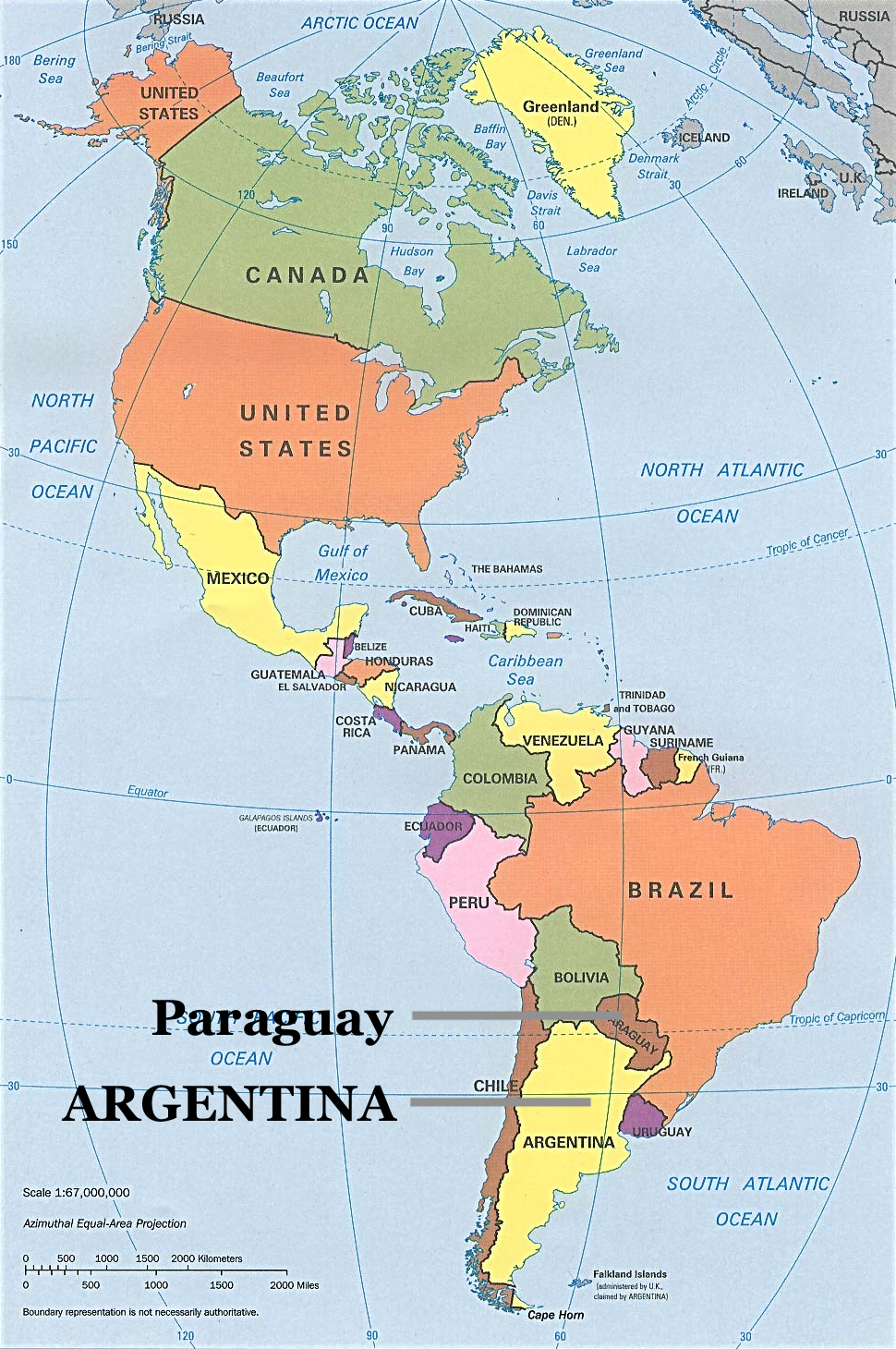
To understand that choice, we need to situate Argentina within its historical, geographical and social context.
At the turn of the twentieth century, Argentina was among the world’s wealthiest nations.
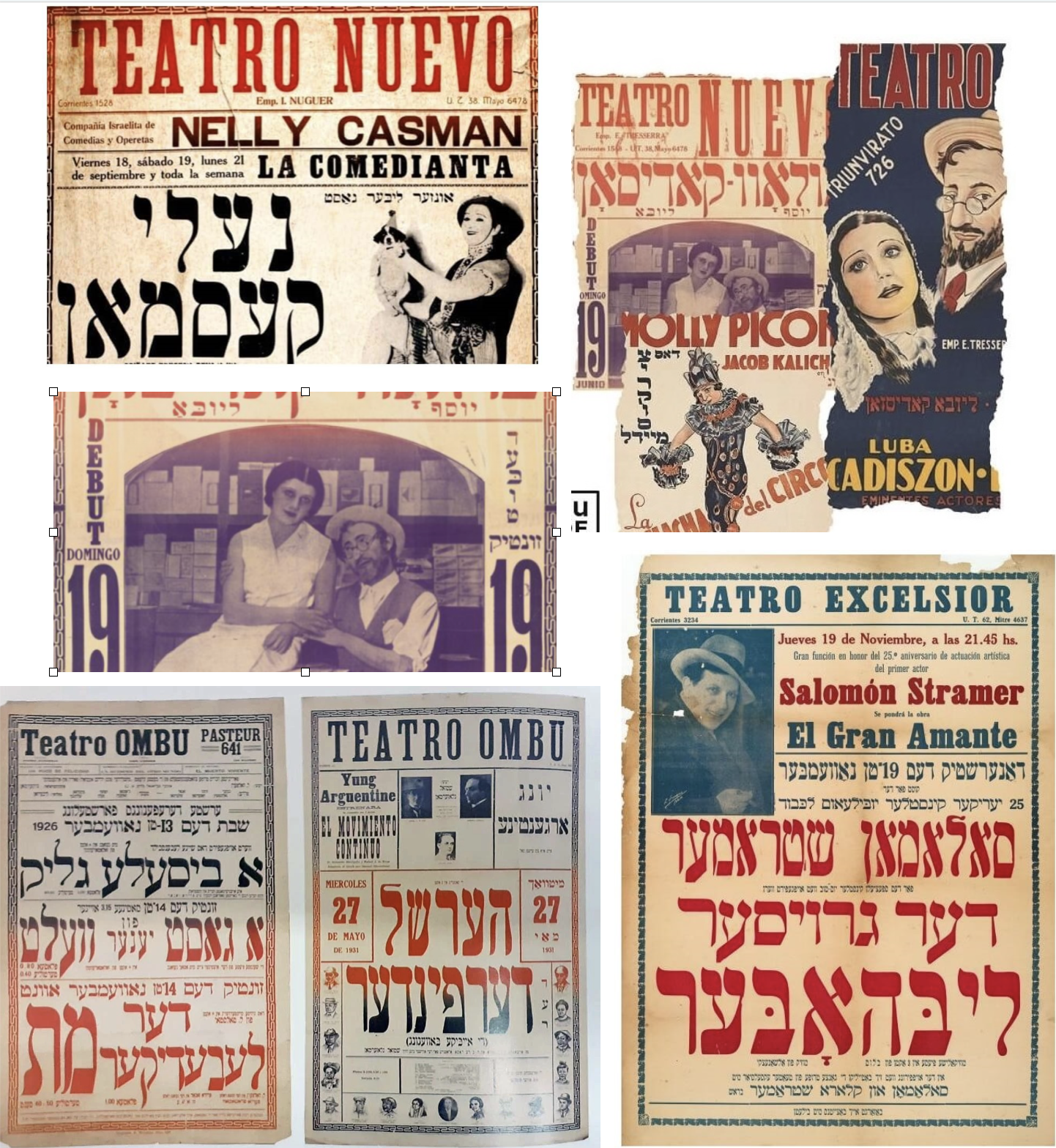
Theatre posters
Known as the “granary of the world,” and with Buenos Aires often described as the “Paris of South America,” the country attracted millions of immigrants. Its system of free, compulsory, and secular public education placed it as a regional leader.
By the end of World War II, Argentina’s Jewish population exceeded half a million. It sustained a dense institutional and cultural life, including mutual aid organizations, schools, theaters, cafés, and synagogues. Institutions such as the AMIA, destroyed in 1994, played a central role in structuring communal life.

Hitler’s birthday rally, 1938
Yet Argentina’s history also includes the presence of nationalist and authoritarian trends receptive to European fascism and the so-called “German miracle”. During the interwar period, sectors of the political class, the military, and Catholic nationalist groups expressed admiration for Nazi Germany. For instance in 1938, one year before the breaking of the war, a mass rally was held in Buenos Aires to celebrate Hitler’s birthday, it was the largest pro-Nazi demonstration outside Europe.
This coexistence—between refuge and hostility—shaped the experience of Jewish migration. Despite bureaucratic restrictions, such as the 1938 Foreign Ministry secret directive 11 that effectively barred Jewish immigration, thousands of Jews entered Argentina. Some did so legally through family sponsorship; others, like my family, entered under false identities.
At the same time, Argentina admitted 180 Nazi perpetrators, including Adolf Eichmann and Josef Mengele. While this contributed to the country’s reputation as a haven for Nazis, it is important to see it within a wider global pattern in which multiple states, including the United States and the Soviet Union, received much more than 180 former Nazis too.
Antisemitism in Argentina has often functioned as a latent structure—intermittent rather than constant, but capable of activation in specific political contexts. Several historical moments show this dynamic.
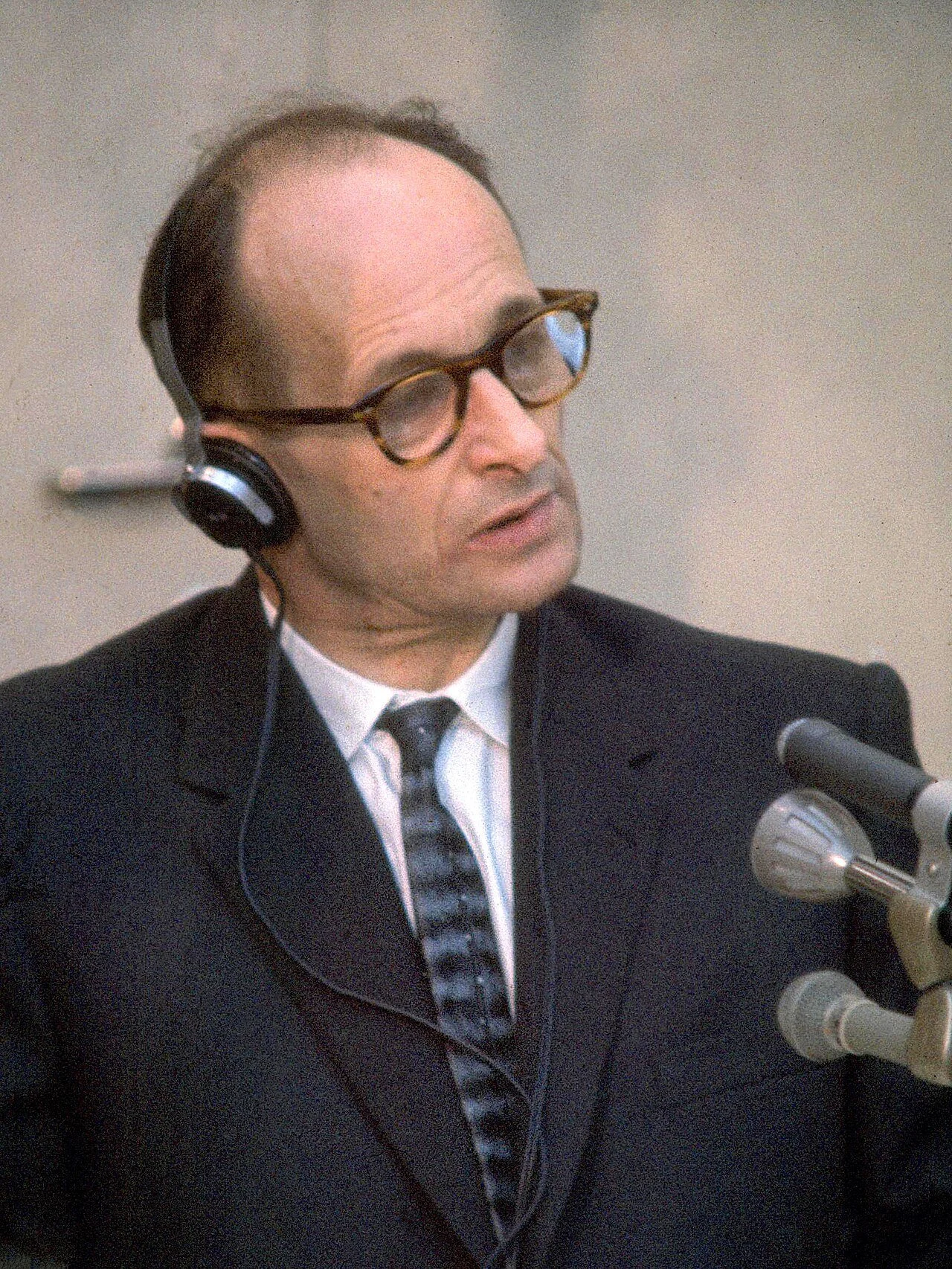
Adolf Eichmann in trial
One was the 1960 capture of Adolf Eichmann in Buenos Aires by Israeli agents that generated a diplomatic crisis centered on national sovereignty. And there were public reactions including expressions of antisemitism that translated into harassment and violence against Jewish individuals and institutions.
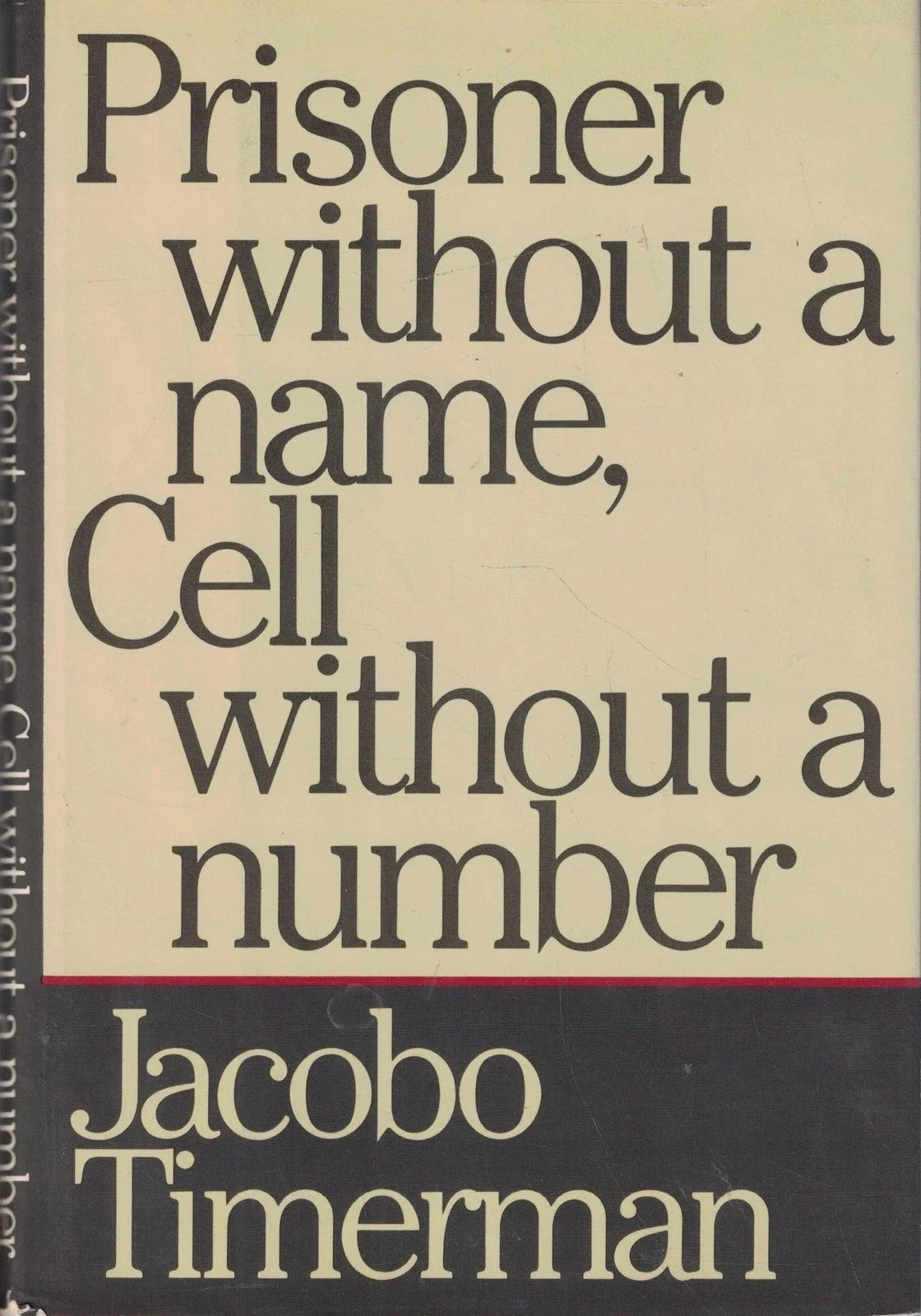
Another moment was during the military dictatorship (1976–1983), when antisemitism manifested with particular intensity within the system of clandestine detention. Jewish prisoners were frequently subjected to aggravated forms of torture marked by explicit antisemitic symbolism and discourse.
Testimonies, including that of journalist Jacobo Timerman, document the ideological dimension of this violence. Moreover, the proportion of Jews was significantly higher than their share of the general population among the desaparecidos, as we call the disappeared youths of the crackdown, suggesting targeted dynamics within wider repression.
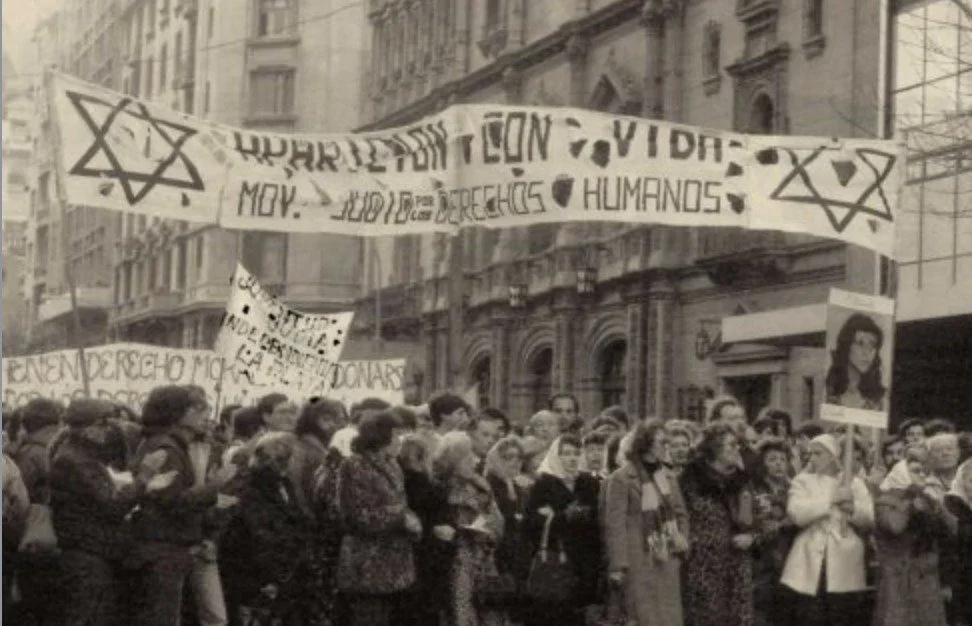
Jewish Movement for Human Rights, 1981
In this context, the emergence of the Jewish Movement for Human Rights—led by figures such as the American Rabbi Marshall Meyer and journalist Herman Schiller—represented a critical intervention linking Jewish identity with universal human rights discourse.
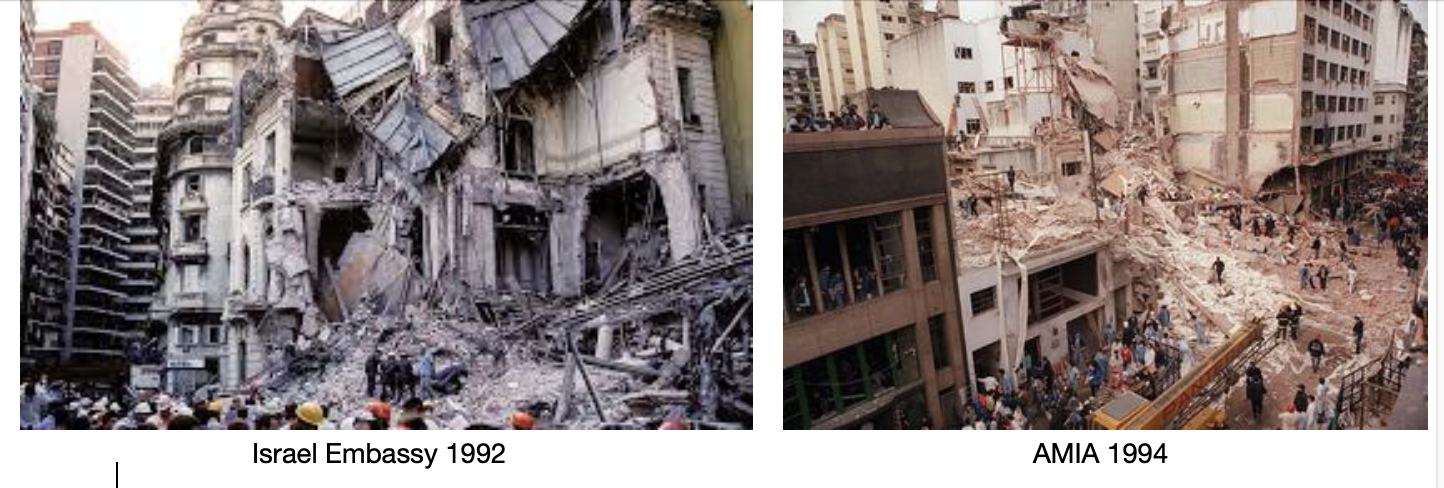
Another set of moments, when latent antisemitism sufaced, were the attacks on the Israeli Embassy in 1992 and the AMIA building in 1994. It marked another turning point. These events not only resulted in mass casualties but also transformed the visibility and self-understanding of the Jewish community. The destruction of the AMIA building had both material and symbolic consequences not only for me: it dismantled physical and metaphorical boundaries, propelling a shift from relative inwardness to public engagement.
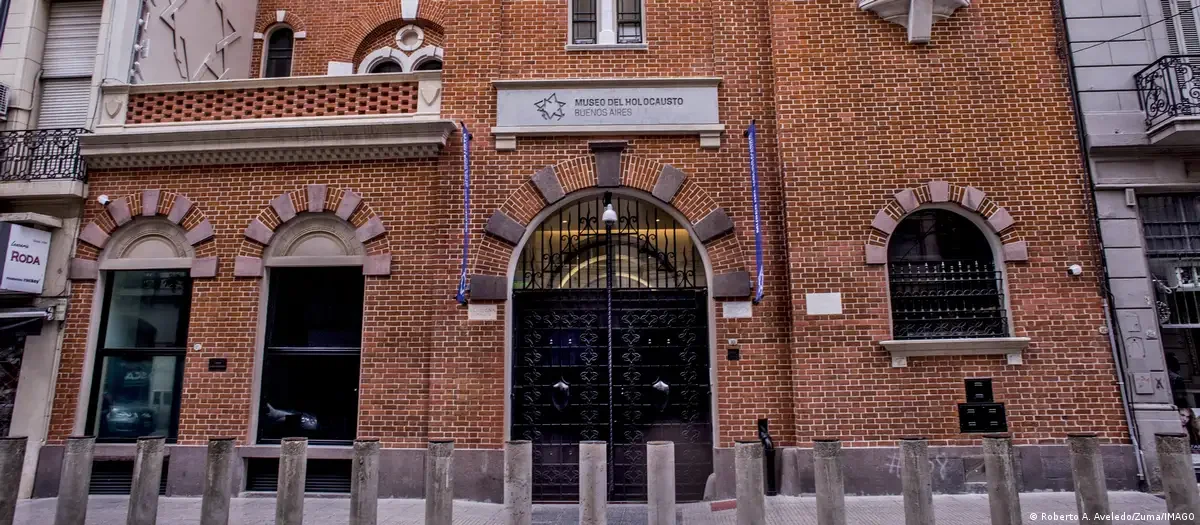
Buenos Aires Holocaust Museum
IHRA presided by Argentina in 2026
In the decades that followed, new institutional and memorial initiatives emerged. These included the creation of the Holocaust Museum and the expansion of Holocaust education, the establishment of research centers, and participation in transnational frameworks such as the International Holocaust Remembrance Alliance (IHRA). Argentina’s leadership role within IHRA reflects a wider process of state engagement with Holocaust memory and this year 2026 has the honor of presiding over it.
At the same time, contemporary events—including the October 7th Hamas attacks in Israel—have reactivated global antisemitism in new forms. These developments raise urgent questions about memory, transmission, and the limits of historical consciousness. The Shoah is no longer confined to the past; it functions as a framework through which present violence is understood.
What many believed belonged to history erupted again with shocking immediacy. New forms of hatred now openly legitimize antisemitism. How do we respond? How do we confront it? Can it be changed?
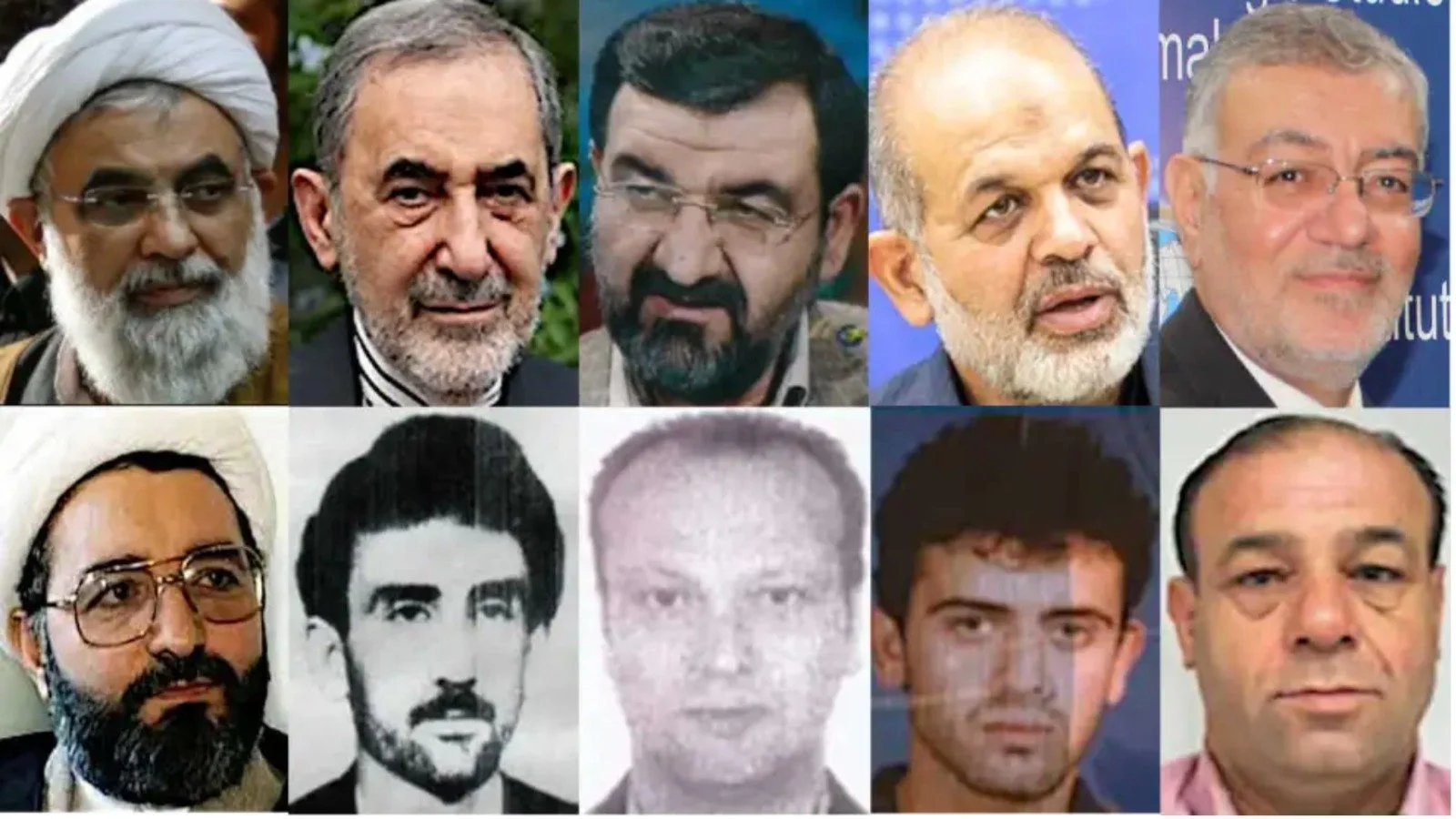
Iranian executed 2025/6
The memory of the Shoah no longer belongs only to the past. But remembering is not enough—it demands new answers in a world that, once again, as my mother said, wants to kill us again, normalizing barbarity.
We are living through a wider conflict involving Iran, whose leadership has long called for Israel’s destruction. For Argentines, this carries particular weight because several Iranian officials linked to the past attacks in Buenos Aires had been on Interpol lists for years and were finally executed.. Argentine courts failed to bring them to justice; in some cases justice is pursued beyond the framework of the law.
The experience of survivors in Argentina was not uniform. Some rebuilt communal networks rooted in shared geographic origins; others aligned with political movements; some turned toward religious life; but many chose silence, concealing their past even within their families.
In my own case, silence structured my upbringing. My parents, fearing exposure, avoided explicit references to Jewish identity. Even my name was shaped by this concern. Rather than giving me a recognizably Jewish name honoring my late mom’s sister,, they chose one that would allow for social invisibility.
This strategy of concealment had lasting effects. I grew up largely disconnected from Jewish communal life. My first conscious encounter with Jewish identity occurred through exclusion: when, as a child, I was told I could not participate in Catholic communion because I was Jewish.
It was a moment of rupture but it did not immediately produce identification On the contrary, it led me to adopt a universalist stance, rejecting particular identity categories. Only decades later, in the aftermath of the AMIA bombing, and when my mother said that “they want to kill us again” did identification emerge as both conscious and voluntary.
But why did the survivors remain silent for decades? There were moments where silence seemed to be broken. Mainly two: the Eichmann trial in the sixties and the Holocaust series starred by Merryl Streep and James Woods in the seventies. Survivors gained visibility but it was still not enough to break de wall of silence.
It was not until the nineties with Schindler’s List and the Shoah Foundation—that survivors that survivors felt to be truly heard and recognized, only then the flood of testimonies began.
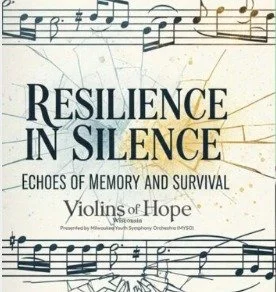
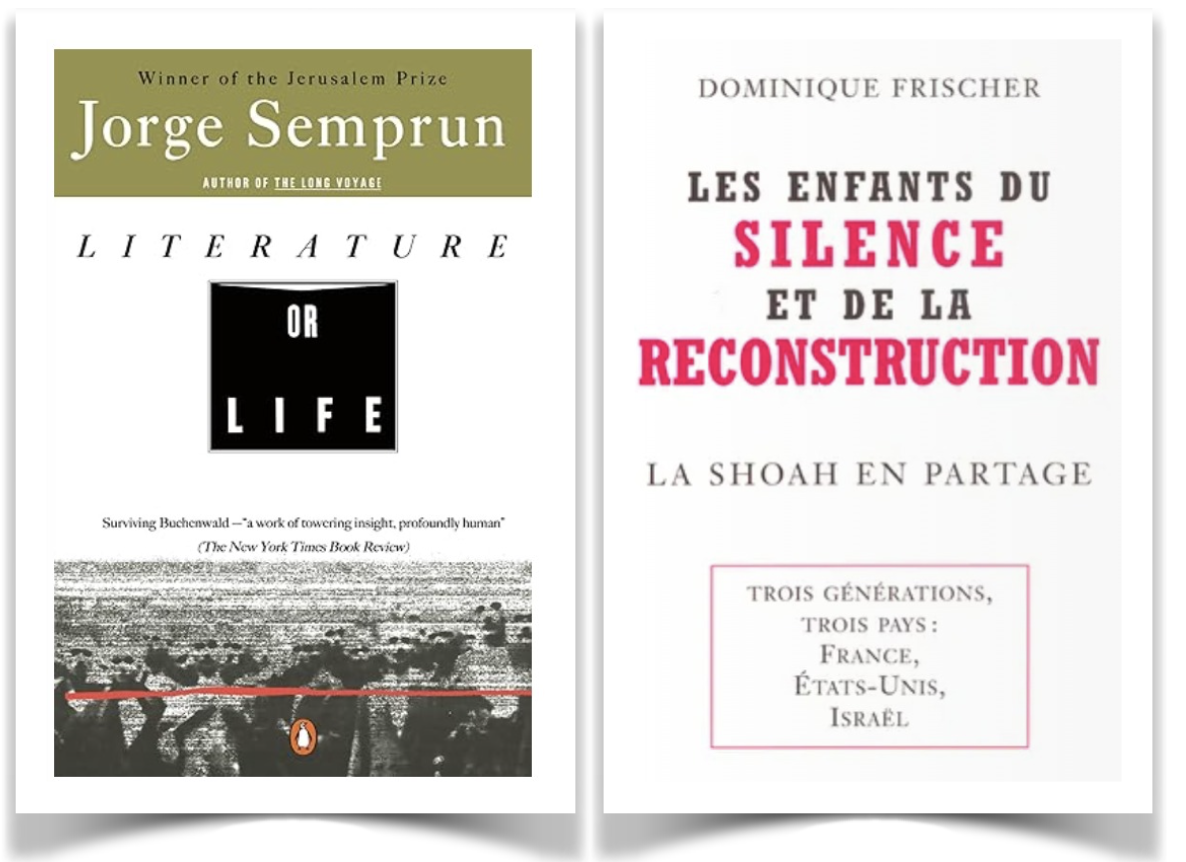
This trajectory invites a wider reflection on the role of silence in the lives of survivors and their descendants. Silence, often understood as negativity or repression, can also function as a protective and structuring mechanism. As Jorge Semprún suggests, the impossibility of immediate narration may be a condition for survival. Dominique Frischer similarly argues that postwar silence enabled the reconstruction of life.
And I see that this pattern is not unique to Holocaust survivors. Comparable dynamics appear among survivors of other forms of mass violence, including genocides, wars, and state terror. In each case, time is required—not only for memory to come to light, but for the reconstruction of trust, only then words can be said. Contradicting the common belief of the benefits of talking, in some circumstances, it seems healthier to remain silent. I thought a lot about it because there must be a reason. And I think it is a matter of trust.
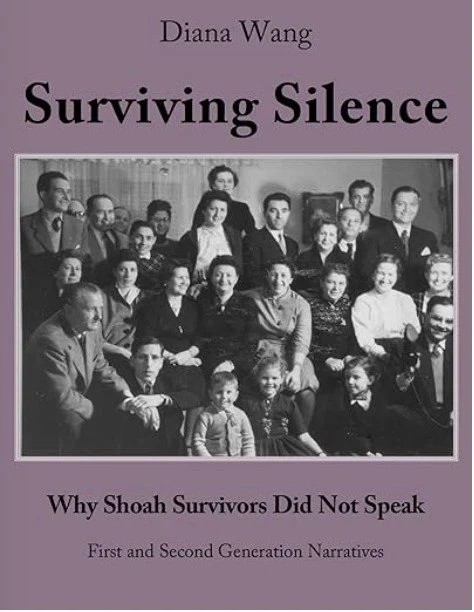
Smiling survivors on my 9th birthday
Mass violence disrupts the foundational assumptions that sustain social life. When the state becomes the agent of persecution, the basic framework of trust collapses. The restoration of that framework is a slow process, grounded in everyday practices: building families, working, creating continuity. That is why they remained silent. Only after this reconstruction of trust can memory be articulated. Trust must be rebuilt—slowly—through living: forming families, working, creating a future. Only then, decades later, can these heavy memories be faced and words can emerge as I tell in my own book. In the photo, the group of survivors on my ninth birthday.
The history of Jewish survivors in Argentina reveals a complex interplay between migration, memory, silence, and identity. It challenges linear narratives of integration, and highlights the enduring effects of trauma across generations.
To remember is not merely to preserve the past. It is to engage actively with the present, to recognize the conditions under which violence becomes possible, and to confront the forms it takes today.
Today the few survivors still alive give testimony whenever they are asked and they are members of the Holocaust Museum and participate in several activities there.
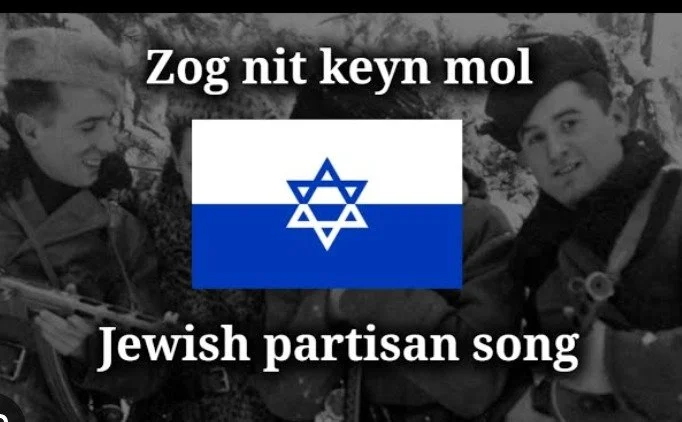
Honoring them and us, their children, I will end with a poem written with Aida Ender, also a daughter of survivors like me. Rephrasing the partisan hymn “Never say this is the final road,” we wrote that:
Each Road Is a Beginning
(Aída Ender and Diana Wang)
We are the ones who survived— plundered, marked, cast out,
imprisoned, violated, humiliated.
We know—yes, we know— no road is ever the last.
We stood in the mud of hell, in darkness, in terror, in storm,
and learned there, that even that road was not the last.
We came through hunger, through cold, through horror—
through typhus, through shame— dreaming of a tree heavy with bread,
believing this road, too, would not be the end.
We are the hidden ones, the fugitives, the spared—
the lucky, the rescued, the saved— and we cry out: there is no final road.
We are the ones who changed our names, who fought in forests,
who rose from rubble and bewilderment confirming that this was not the end.
With memory still burning, with scars that do not fade,
we walked railways, streets, open roads under leaden skies,
eyes wide—always searching. No road was the final one.
From soaked earth after the storm new shoots broke through.
Leaves and fruit covered the wounded trees.
Seeds pushed upward—fierce, insistent.
We stood again—rebuilt, defiant.
And kept walking because no road was the end.
We mourn our dead— forgetting is forbidden.
Those who come after us take up what we carry.
They deepen our footprints, bear memory forward,
eyes set on an open horizon— promise everywhere.
Because every road begins again. None is the last.
We are the ones who survived, and the ones born after.
We drink from life, measure for measure.
Not that road— not this one—
not any road— will be the last.
For, every road is a beginning.
And there will be others. Many more.
The Jewish people live. We are here.
Mir zainen do. Am Yisrael chai.